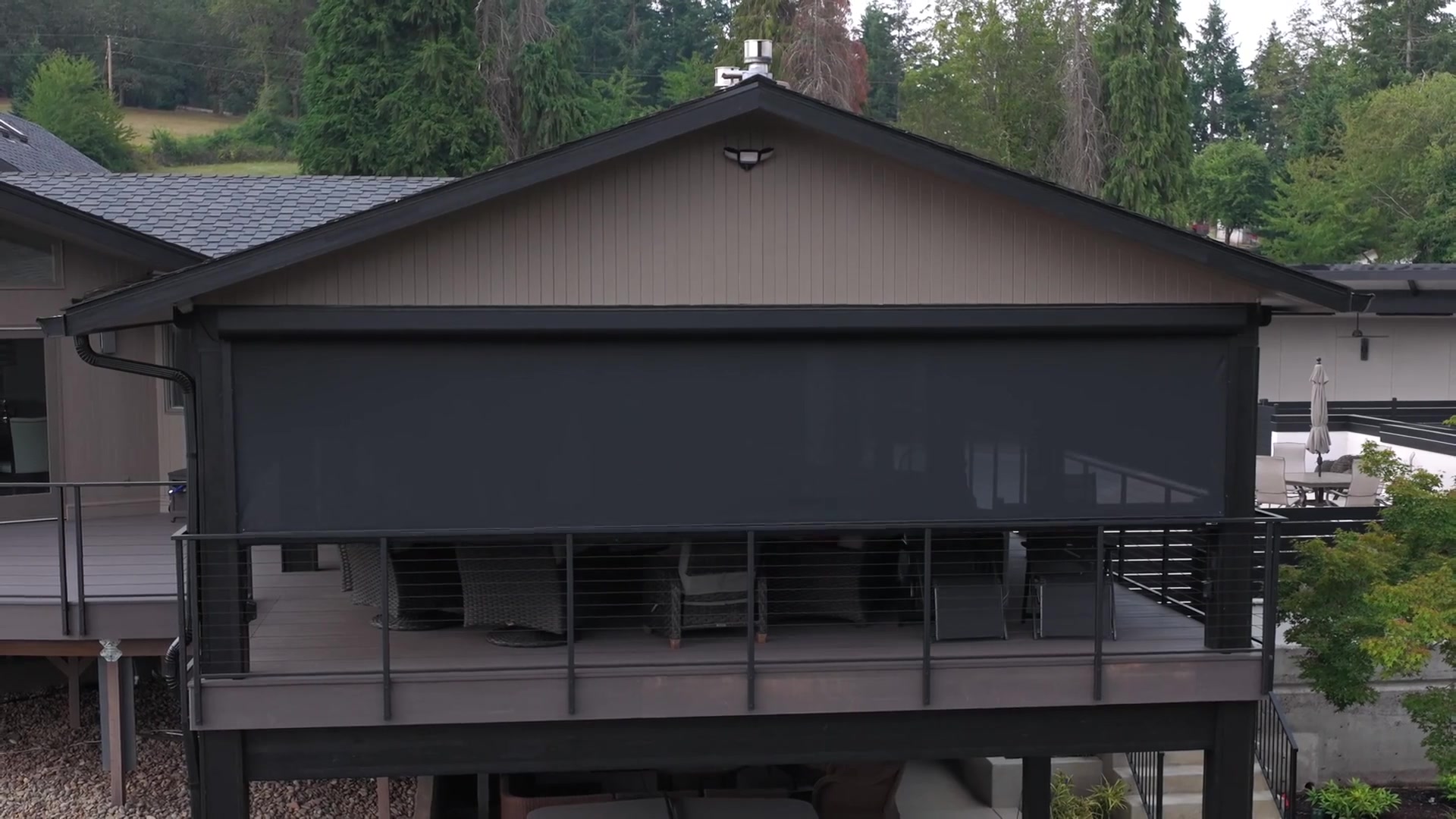
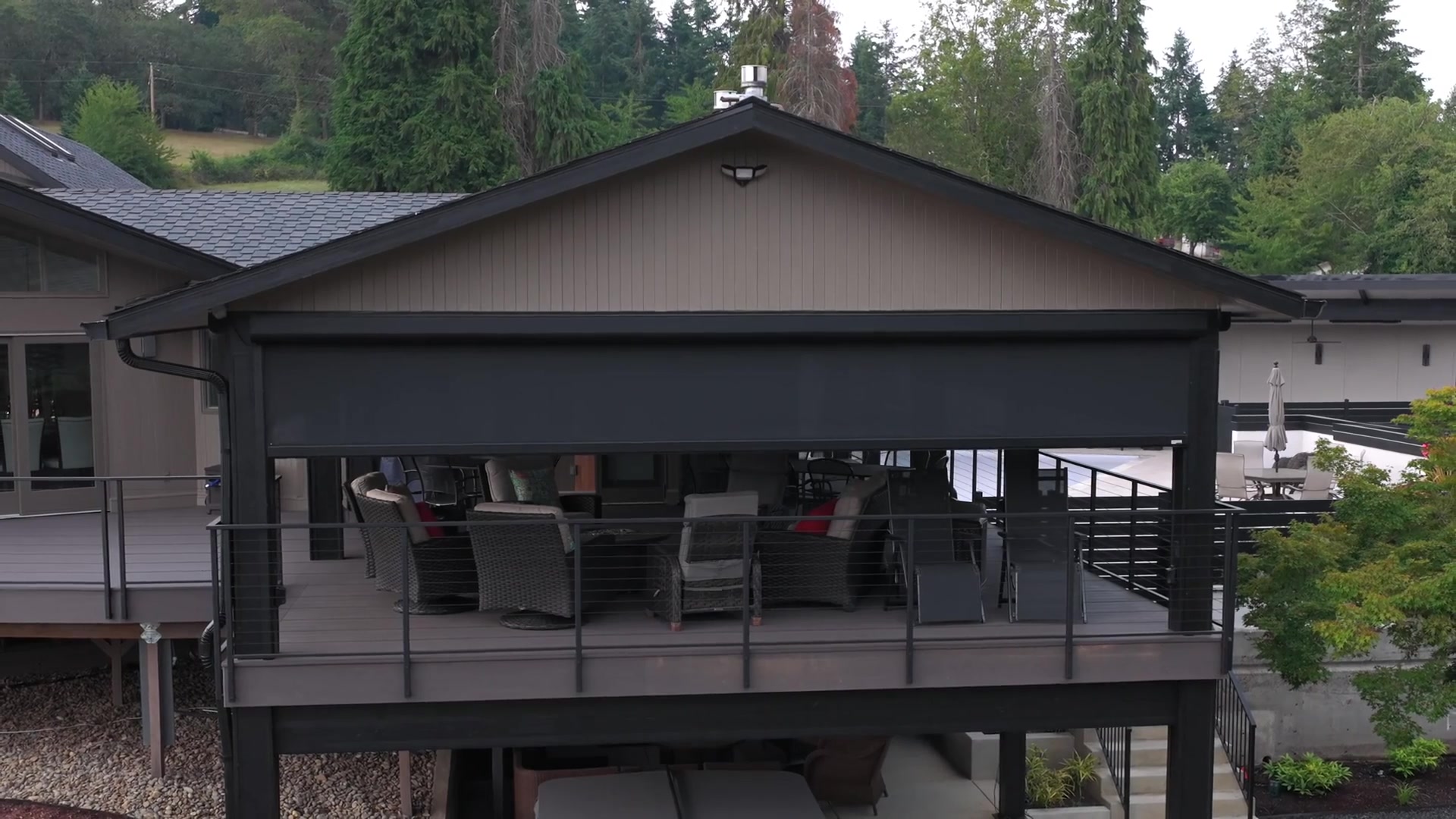
Screens Fully Deployed
Fully deployed, the screens seal off the entire covered deck — blocking wind, rain, and glare while keeping the outdoor space usable year-round.
A Closer Look at the Screens
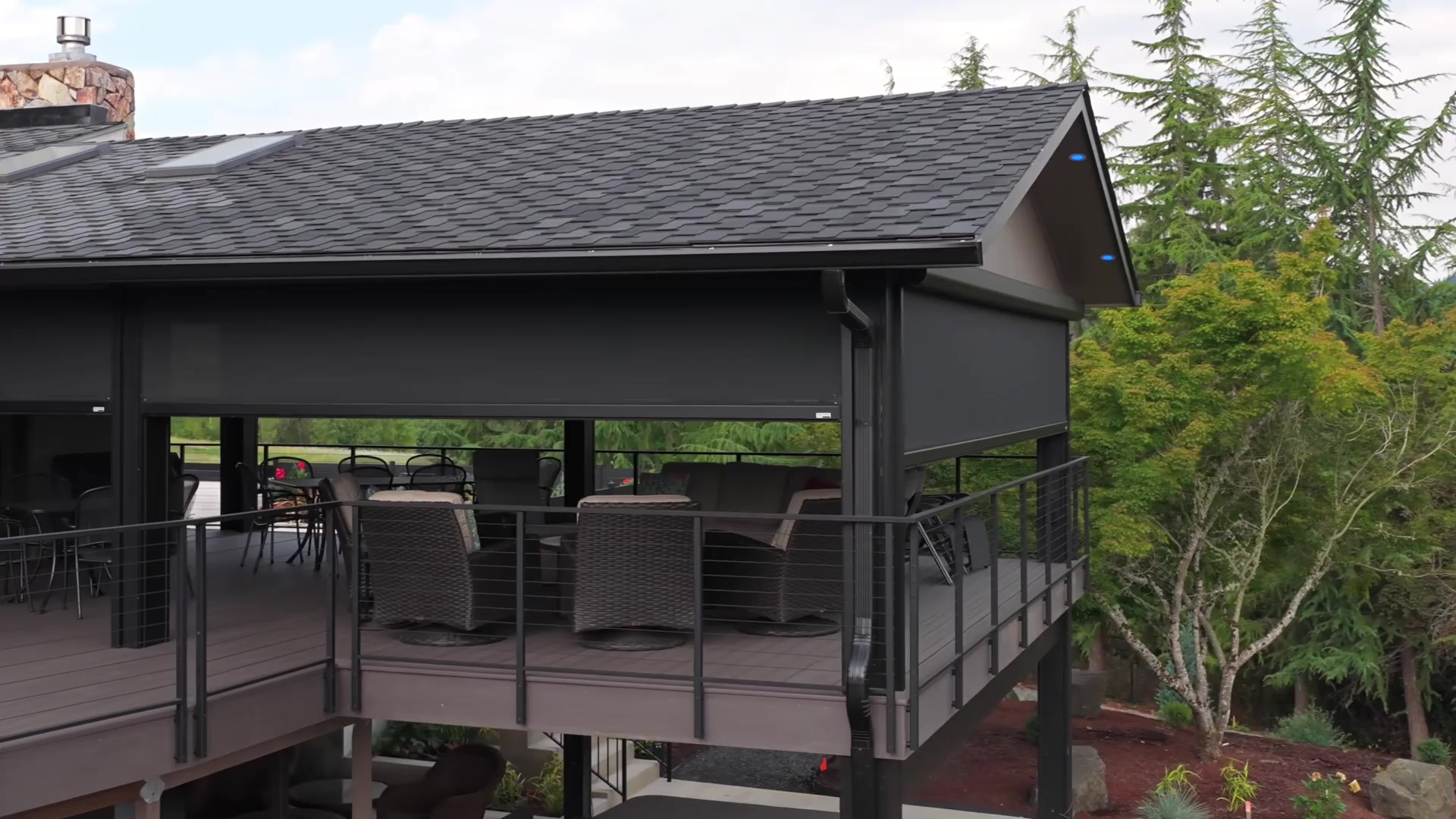
A side angle shows how the mesh tucks into a slim housing at the top of the structure when it’s not needed, and unrolls smoothly along the track when it is.
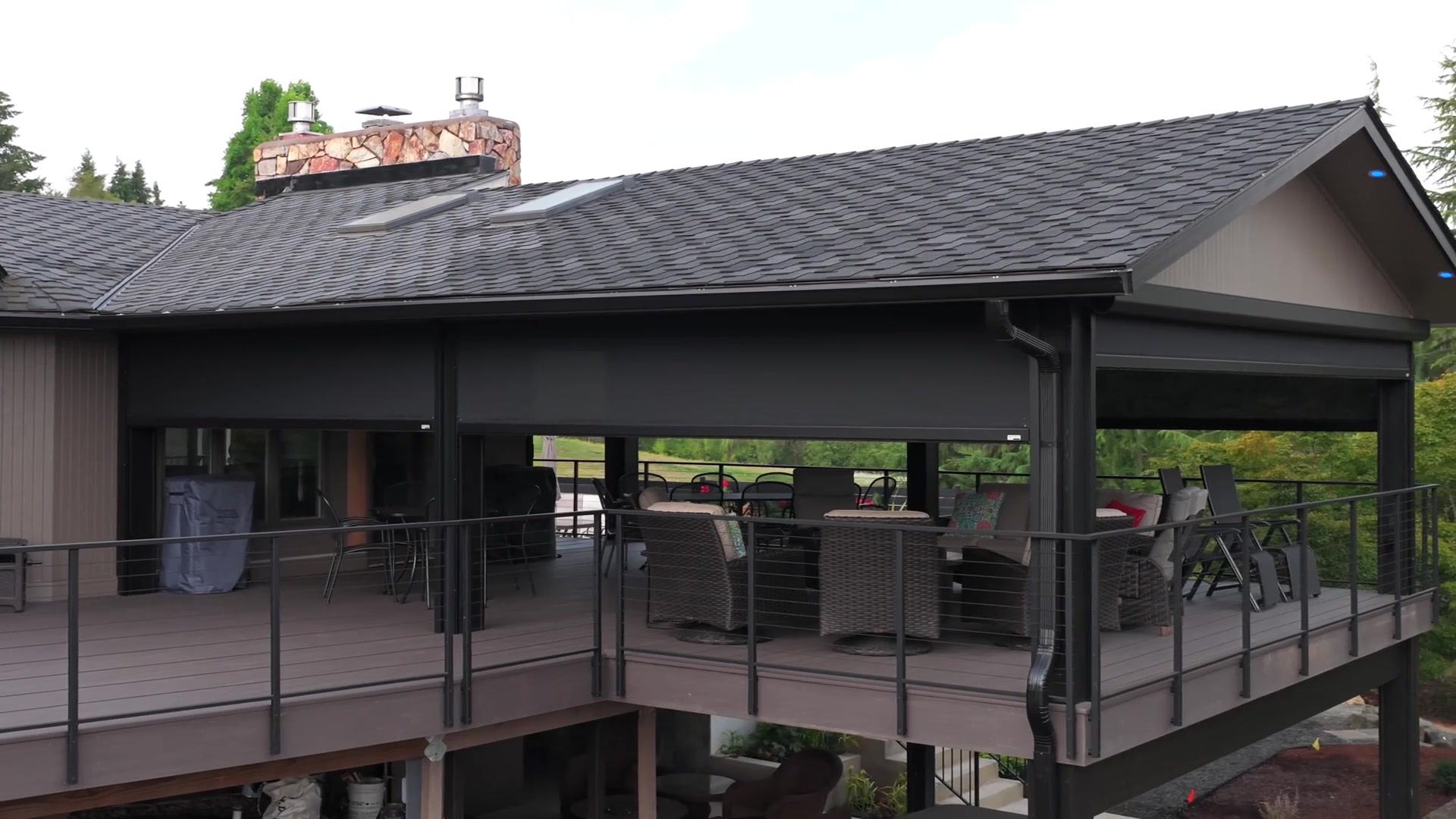
Partially Retracted
Screens can stop at any point along the track, so part of the space can stay open for airflow while the rest stays screened.
Track and Hardware Detail
Every Fenetex screen runs on a patented, self-tensioning track system — the same hardware shown here keeps the mesh taut and weather-tight on every installation we build.
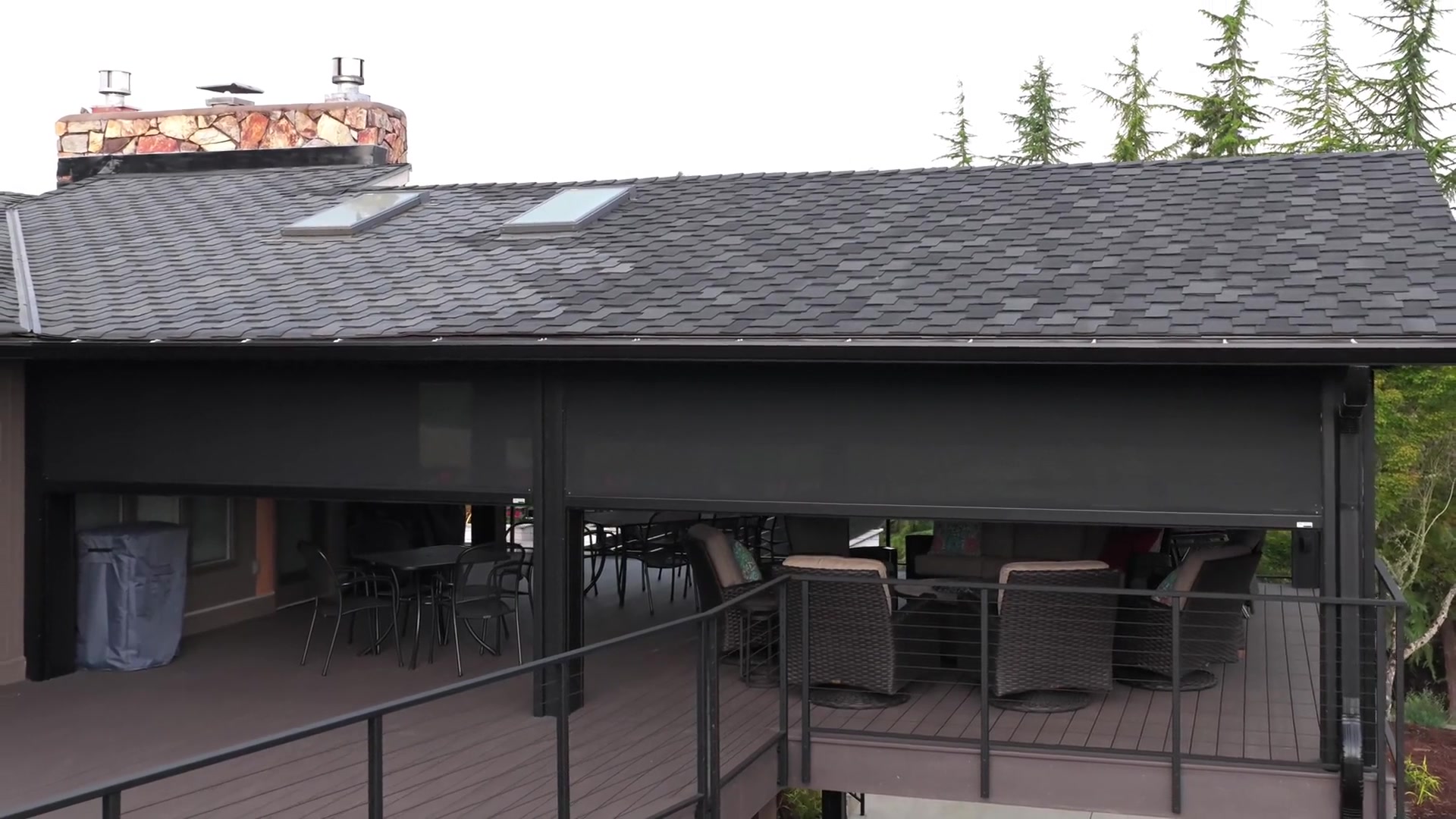
Featured Project Highlights
This Oregon deck installation shows the full Fenetex system in action, from the aerial view down to the track hardware, built to handle the wind, rain, and sun exposure common across Oregon’s covered outdoor spaces.
Want to see how it looks for a specific screen type? Visit our insect screens, shade screens, or clear screens pages for details.
What to Look For in Your Own Installation
Every Fenetex installation should include a self-tensioning track system, weather-resistant mesh rated for Oregon’s climate, and mounting hardware suited to your specific structure.
Look for a screen that operates smoothly at any point along its track, integrates cleanly with your existing roofline or pergola, and comes backed by a local, factory-trained installer.
Every project starts with a free on-site consultation, so you know exactly what fits your space before any work begins.
Ready to get started? Learn more about the Fenetex system or reach out for a free quote on your own project.
Want to See Your Project Featured Here?
Once your motorized screens are installed, ask us about adding your project to this Fenetex screens gallery for future homeowners to see.