
The homeowners built this place for the view and for having people over. By late summer that was not working: the sun came straight in under the patio cover, and at birthday parties guests kept drifting closer and closer to the house looking for shade.
A shade sail came first, and the wind settled it
Before calling us the owner tried a shade sail. In his words, “they aren’t that great in the wind” — and this site gets wind. That is the usual sequence on an exposed opening: the cheap fix goes up, the weather takes it down, and the real question turns out to be how wide the opening is.
Why the span decided the product
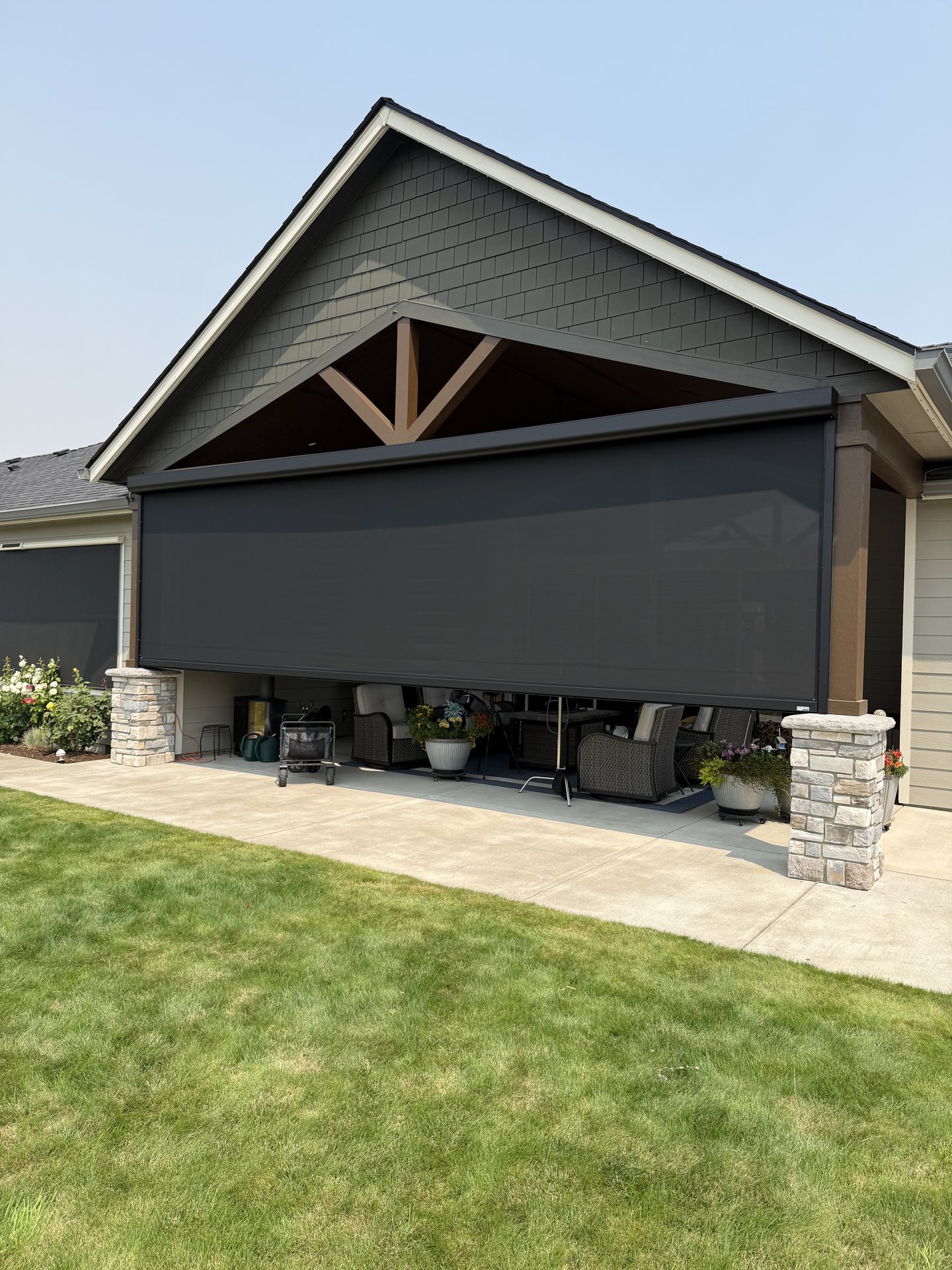
The opening runs the full length of a gabled patio cover with an exposed timber truss and stone columns. At that width nothing fixed works: an awning cannot cover it, and anything solid would have blocked the view the house was designed around. It needed one heavy-duty screen carrying the whole span, on a self-tensioning track that keeps the fabric flat instead of letting it sag or bind when the wind pushes on it. The screen is rated for high wind, and lowering it now cuts the wind as well as the sun.
What it is actually like to sit under
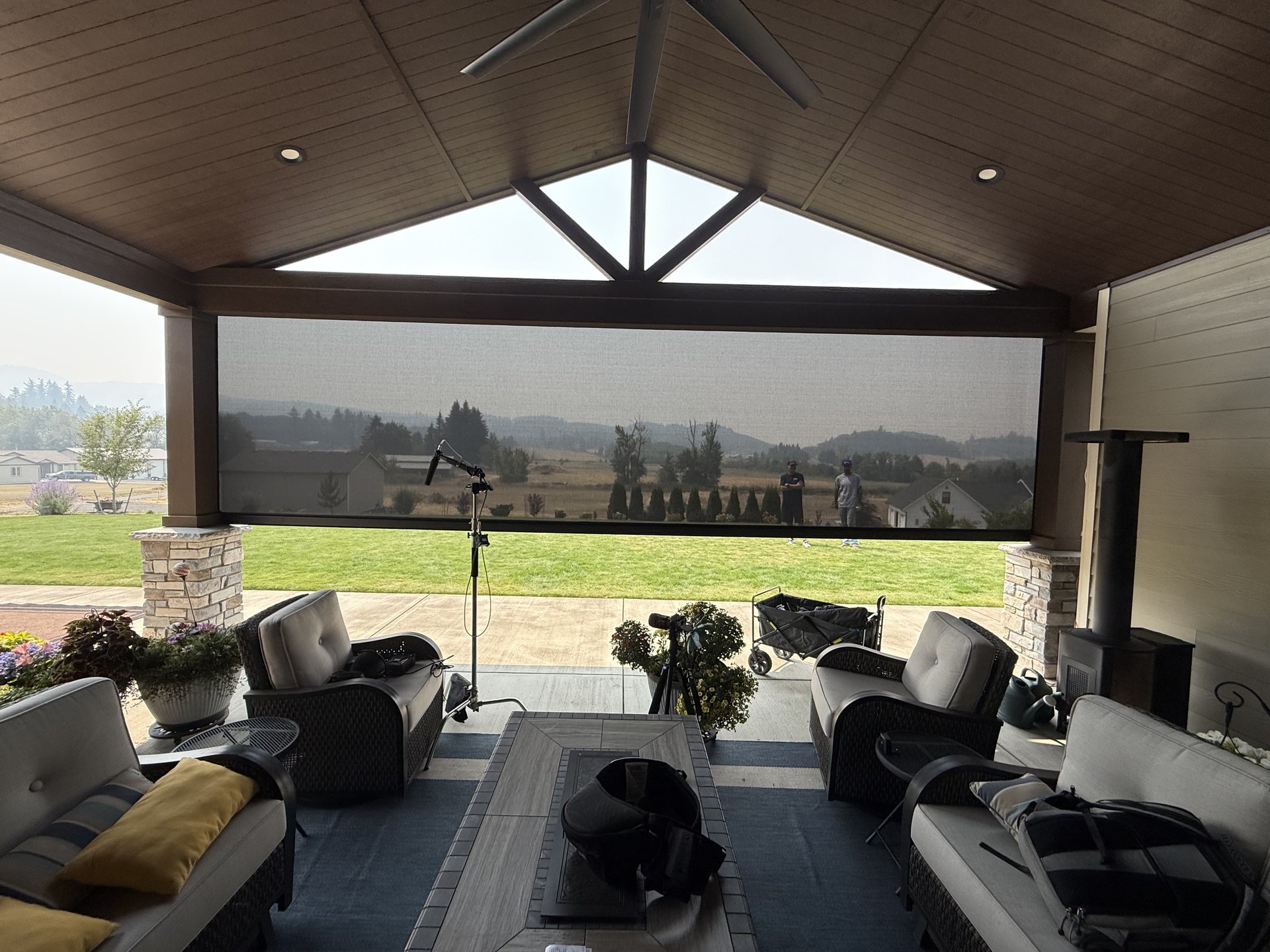
This is the part people are skeptical about until they see it. The owner puts it plainly: “sitting here, you can still see under it and get the air ventilation, but it’s providing a lot of shade.” On the day of filming it was around 90° outside and the space was comfortable. From the outside, the screen and its housing box “integrates right in with the rest of our house.”
Hear it from the homeowner
Does a motorized shade screen block the view?
Not from the inside. Shade mesh is woven to stop sun from the bright side while staying transparent from the shaded side, which is why the fields and hills are still visible in the photo above and why the owner can still see out and feel the breeze. From outside in full sun the same screen reads dark and solid, which is what gives you daytime privacy.
Will a shade sail work instead of a motorized screen?
On a sheltered patio, sometimes. On an exposed one, usually not — sails catch wind, stretch and tear, and they cannot span a wide opening without posts in the middle of your view. A motorized screen retracts out of sight when you do not need it, carries a wind rating, and rolls back into a housing that mounts to the structure. That is the trade: more up front, and it is still there in five years.
The install
Michael handled scheduling and kept the owner posted from the day the product shipped; Nick ran the install on site. The owner’s summary: “They’ll show up on time. They’ll communicate with you and they’ll do a good job.”